Cast: Padam Singh Kapri, Heera Devi
Director: Vinod Kapri
Runtime: 115 minutes
n an era when Indian multiplexes are increasingly dominated by high-decibel spectacles and star-driven formulas, journalist-turned-filmmaker Vinod Kapri’s Pyre (Chita) arrives like a quiet, devastating whisper. Made on a modest budget and carried on the weathered shoulders of two non-professional octogenarian actors, this Hindi-language drama is a deeply moving meditation on aging, rural abandonment, and a love that refuses to fade even at the edge of existence.
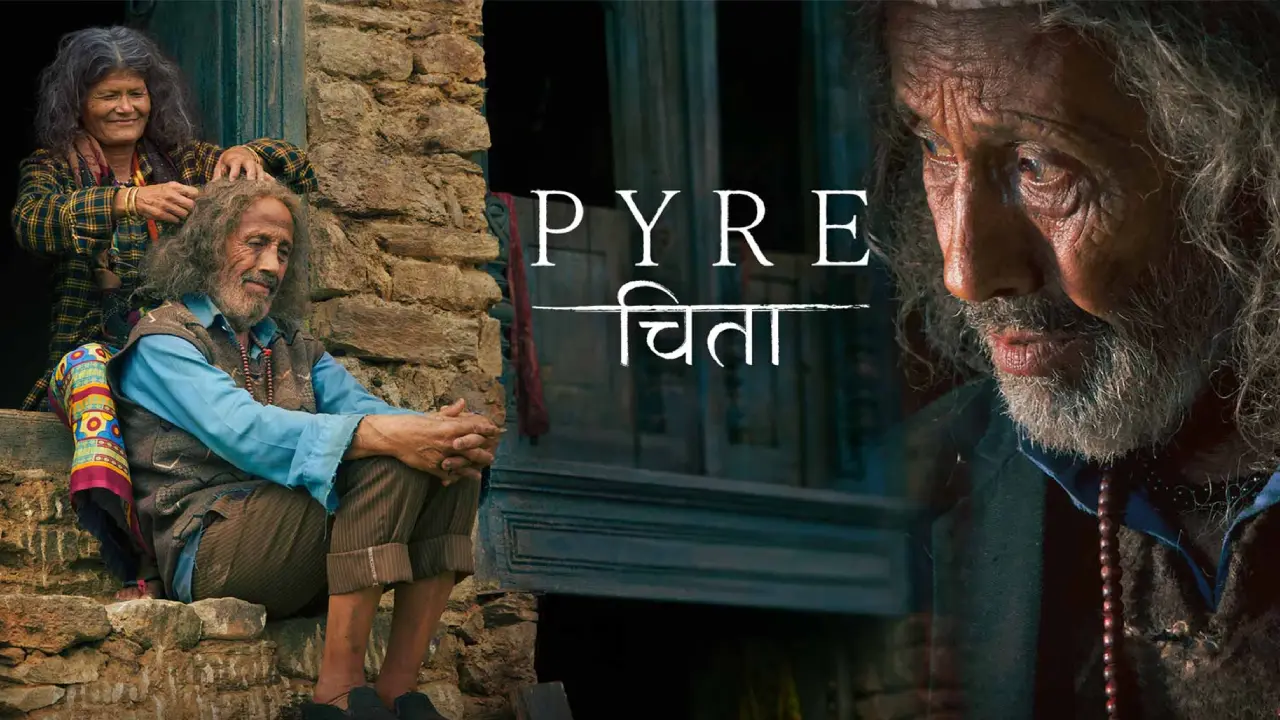
Set in a near-empty Kumaon village in Uttarakhand—one of the many Himalayan “ghost villages” hollowed out by decades of youth migration—the film follows Padam (Padam Singh Kapri) and Tulsi (Heera Devi), fondly known as Bubu and Aama. Married for over six decades, the elderly shepherd couple live in a stone house cut off from roads, electricity, and medical care. Their son, Hariya, left for Mumbai nearly 30 years ago and never returned. Yet, life in their desolate hamlet is far from bleak; it is sustained by their sharp, affectionate banter, shared Kumaoni folk songs, and the quiet rhythm of daily survival.
ALSO READ : RAMAYANA REVIEW : https://bollywoodmonk.com/ramayana-review-a-massive-visual-leap-for-indian-cinema/
Kapri’s screenplay avoids conventional melodrama, letting tension build organically from the harsh realities of their geography. When Tulsi’s health begins to fail, Padam’s only way to call for help is by blowing a traditional long-horn trumpet across the valley. As the last remaining neighbors pack their belongings to leave for the plains, Padam is confronted with a chilling fear: when death finally arrives, there will be no one left to carry their bodies down the mountain. Driven by dignity and devotion, he begins gathering wood to construct two funeral pyres right outside their home. A sudden letter from their estranged son briefly sparks hope, only to underscore the cruelty of prolonged waiting.
The emotional anchor of Pyre lies in its casting. Padam Singh Kapri, a retired army havildar, and Heera Devi, a local farmer—both acting in front of a camera for the first time—bring an unvarnished authenticity that no trained star could replicate. Their chemistry feels lived-in rather than rehearsed, whether they are teasing each other over a cup of tea or sitting in shared silence. While a few Hindi dialogue exchanges occasionally sound slightly self-conscious—given that Kumaoni is their native tongue—their expressive faces and physical warmth effortlessly bridge every gap.
Behind the camera, the technical craft elevates this intimate story into universal cinema. Cinematographer Manas Bhattacharyya captures the Himalayas not as a postcard tourist destination, but as an indifferent, almost claustrophobic expanse where mist and silence swallow human cries. Editors Patricia Rommel and Subhajit Singha maintain a patient, unhurried pace that respects the audience’s empathy, while Oscar-winning composer Mychael Danna and Amritha Vaz deliver a restrained score that never intrudes on the natural soundscape of wind, footsteps, and crackling firewood. A poignant song written by Gulzar adds further lyrical depth.
Beyond its artistic merit, Pyre is a vital reminder of why independent cinema must be protected and celebrated. Having won 18 international awards—including top honors at the Tallinn Black Nights Film Festival—the film still struggled for two years to secure an Indian theatrical release and continues to battle big-budget tentpoles for screen space. By turning its lens toward invisible citizens and systemic rural neglect, Kapri’s film proves that cinema does not need massive budgets to leave an indelible mark. Pyre is heartbreaking, humane, and essential viewing.